top of page

Pluralism as a Catalyst for Expanding Human Consciousness

Today on this US Thanksgiving, I listened to a message from His Highness the Agakhan V, my mind wandered and pondered new connections. Pluralism, consciousness, and Thanksgiving. Specifically, the impact of pluralism on consciousness. What are the implications? How does consciousness change? How is Thanksgiving contributing to this.


Today’s Thanksgiving in the US offers us a natural entry point into the deeper conversation about pluralism and consciousness. The modern holiday – shaped by Indigenous history, immigrant traditions, cultural blending, and evolving meanings – is itself a pluralistic construct. Every home interprets it differently. Every family brings a different story to the table. That diversity becomes more than a social ritual; it becomes a lived demonstration of how consciousness expands when many perspectives share space. Thanksgiving, in its most aspirational form, is an annual reminder of how collective presence across differences strengthens empathy, widens perception, and opens the mind to a broader field of understanding.


So what does valuing and nurturing a pluralistic society offer us?


I believe because a pluralistic society acclimates consciousness to difference, that then becomes a catalyst for cognitive expansion. Pluralism creates conditions where multiple worldviews coexist, interact, and challenge one another, and this interaction in turn enhances the range of what a mind can perceive, integrate, and hopefully embody.


I read research in cognitive science that notes that exposure to diverse cultural frames increases cognitive flexibility and perspective-taking (Verified – Columbia University, Journal of Cross-Cultural Psychology). Pluralism functions as a tool for consciousness development because it kind of forces the mind to operate beyond habitual patterns and symbolic defaults; a consciousness encountering many valid ways of seeing the world is then pushed to evolve a wider perceptual bandwidth.


When someone encounters unfamiliar ideas, their predictive neural models must update. Therefore this becomes a mechanism through which pluralism affects neuroplasticity (Emerging – UCL Institute of Cognitive Neuroscience). Studies tracking multicultural exposure show measurable increases in cognitive integration – the brain’s ability to synthesize conflicting information rather than collapse into binary interpretations. This shift aligns with contemplative traditions describing consciousness as a spacious, layered field capable of holding complexity without fragmentation. Pluralism operationalizes that spaciousness in ordinary life.


Pluralism also creates relational environments that dim the brain’s threat response to difference. Intergroup contact studies show that positive exposure to diverse groups reduces amygdala reactivity and increases activity in prefrontal regions associated with rational evaluation (Verified – PNAS). When the nervous system learns that difference is not danger, consciousness now becomes more stable and less reactive.


Many of us employ the terms”Expanded awareness” in metaphysics especially. As I understand it, consciousness functioning from integration instead of separation or love instead of fear. Maybe pluralism provides the lived conditions where this nervous-system transformation becomes possible.


So what’s the philosophical representation of this? Pluralism is introducing a constructive tension where no single worldview can monopolize meaning. This forces a person to hold multiple truths simultaneously, a cognitive act resembling what mystics described as holding paradox. Some researchers suggest that the ability to tolerate paradox correlates with higher-order reasoning and metacognition (Emerging – Cognitive Psychology Review).


The bigger question follows: Could pluralistic environments be indirectly training the mind toward these higher functions by repeatedly exposing it to perspectives that cannot be resolved through simple agreement? SO NOE pluralism becomes more than a social principle it almost evolves into a developmental technology.


We often see spiritual traditions thrive in pluralistic settings because they allow consciousness to compare, question, and refine its relationship with the unseen. Pluralism prevents stagnation; it invites inquiry. The individual is given a broader metaphysical dataset, and from that diversity, discernment sharpens. Some contemplative scholars propose that spiritual maturation requires exposure to multiple frameworks, compelling the to rely on inner verification rather than inherited belief (Speculative – comparative mystical discourse as formalized by Steven T. Katz, 1978).”


In this sense, pluralism becomes a mirror revealing which parts of consciousness are conditioned and which are authentic.


In practice, pluralism creates a landscape where consciousness can test hypotheses – about self, meaning, reality, and the unseen layers of existence. Every encounter with difference becomes a moment of expansion, a slight increase in the range of what the mind can hold. The more perspectives a person engages with, the more multidimensional their awareness becomes.


Now when society supports pluralism at scale, the collective consciousness gains the same benefits: flexibility, reduced reactivity, increased creativity, and a broader field of possibility.


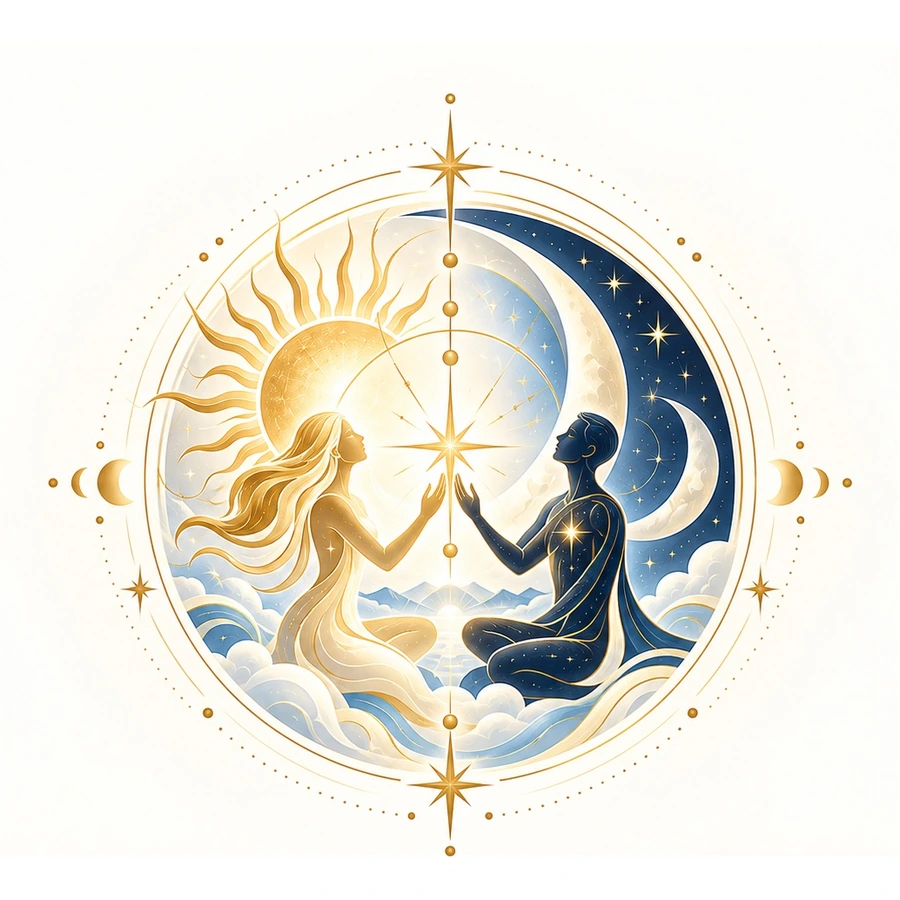
Let’s bring in frequency. Metaphysically, pluralism functions like a harmonic field. Each worldview is a frequency. When multiple frequencies coexist, the field becomes richer, more textured, and capable of producing emergent patterns that no single tone could generate. Some theorists describe collective consciousness as an emergent phenomenon arising from these interactions (Speculative – Systems Consciousness Models). Whether one accepts this model or not, the outcome is clear: pluralism gives consciousness more material to work with – more data, more nuance, more access points into understanding the complexity of being alive.


Thanksgiving, viewed through this lens, becomes more than a holiday. It becomes a symbolic rehearsal for pluralistic consciousness: many stories, many histories, many truths, one table. And each year, the simple act of sitting together expands what human consciousness is capable of holding.


Know that today simply by gathering and sharing your neurons are firing differently and effecting the whole positively. How we are what we do and our choices and reasons change consciousness and outcomes.


Happy Thanksgiving!


Footnotes

1. Columbia University. Journal of Cross-Cultural Psychology, “Cultural Frame Switching and Cognitive Flexibility,” peer-reviewed research demonstrating increased cognitive flexibility when individuals engage with multiple cultural perspectives.

2. University College London (UCL), Institute of Cognitive Neuroscience. “Neuroplasticity and Environmental Complexity,” research indicating that exposure to diverse stimuli enhances neural integration.

3. Pettigrew, T. F.; Tropp, L. R. “A Meta-Analytic Test of Intergroup Contact Theory.” Proceedings of the National Academy of Sciences (PNAS), 2006.

4. Cognitive Psychology Review. “Paradox Tolerance and Higher-Order Cognition,” analytical review discussing correlations between exposure to cognitive dissonance and metacognitive development.

5. Comparative Mysticism Discourse — refers to the academic field studying similarities and differences in mystical reports across Sufism, Kabbalah, Christian mysticism, Vedanta, Tibetan Buddhism, and shamanic traditions. (Key sources: Katz, Steven T. Mysticism and Philosophical Analysis; Forman, Robert K.C. The Problem of Pure Consciousness.)

6. Systems Consciousness Models — an emerging body of work in consciousness studies describing collective consciousness as an emergent system arising from interacting individual minds. (Representative sources: Tononi, Giulio. Integrated Information Theory; Varela, Francisco. The Embodied Mind.)


Links:


Tags: consciousness, pluralism, thanksgiving, metaphysics, cognitive science


Recent Posts

See All
bottom of page